Hanoi’s sights sit in three clusters, not one sprawl: Ba Dinh (Ba Đình), home to the mausoleum and the state buildings of the north; Hoan Kiem (Hoàn Kiếm) and the Old Quarter around the lake; and Tay Ho (Tây Hồ), the West Lake pagodas. Each cluster can be walked in a morning or a day — but one of them, Ba Dinh, has a strict opening-hours sequence that will lock you out of its main sight if you walk it in the wrong order.
Why three clusters, not a scattered list
Most guides to Hanoi list sights neighborhood by neighborhood and leave the sequencing to the reader. That works for a city with a metro that reaches everything. Hanoi’s metro does not: it has two elevated lines, Cat Linh–Ha Dong and the open stretch of Nhon–Hanoi Station, and neither goes where the sights are. The three clusters below are each compact enough to walk — a few hundred meters to just over a kilometre between stops — which means the only real planning problem is not which sights exist but what order to see them in, because one cluster has a building that closes mid-morning and another has one that closes for lunch.
Cluster 1: Ba Dinh — the mausoleum complex and Temple of Literature
This is the cluster that punishes a loose schedule. Ho Chi Minh’s Mausoleum, on Ba Dinh Square, is free to enter but runs on a narrow and non-negotiable window: morning viewing only, with the line typically closing well before midday, and the site is traditionally shut entirely on Mondays and Fridays. It also closes altogether for several weeks most years for maintenance, on dates announced only shortly in advance. None of that is this site’s figure to give — it is the mausoleum management board’s schedule, published and updated through Vietnam’s official tourism channels, and it is the first thing to check before building any day around this cluster. Shoulders and knees need to be covered; shorts are turned away at the line.
| Stop | What it is | Why the order matters |
|---|---|---|
| 1. Ho Chi Minh’s Mausoleum | The embalmed body lies in state; viewing is on foot, in a moving line, with no bags or photography inside. | Go first, always. Morning-only, and closed on the traditional days — confirm the current pattern before traveling. |
| 2. Presidential Palace grounds, the stilt house, One Pillar Pagoda | The French-built palace (viewed from outside), Ho Chi Minh’s wooden stilt house, and the small pagoda built on a single stone pillar. | These sit inside or beside the same grounds and keep hours closer to a normal museum day, so they can follow the mausoleum without a second time-check. |
| 3. Ho Chi Minh Museum | A state museum on the life and thought of Ho Chi Minh, built in the 1980s beside the mausoleum. | Same grounds, same morning window — finish the Ba Dinh complex here before moving on. |
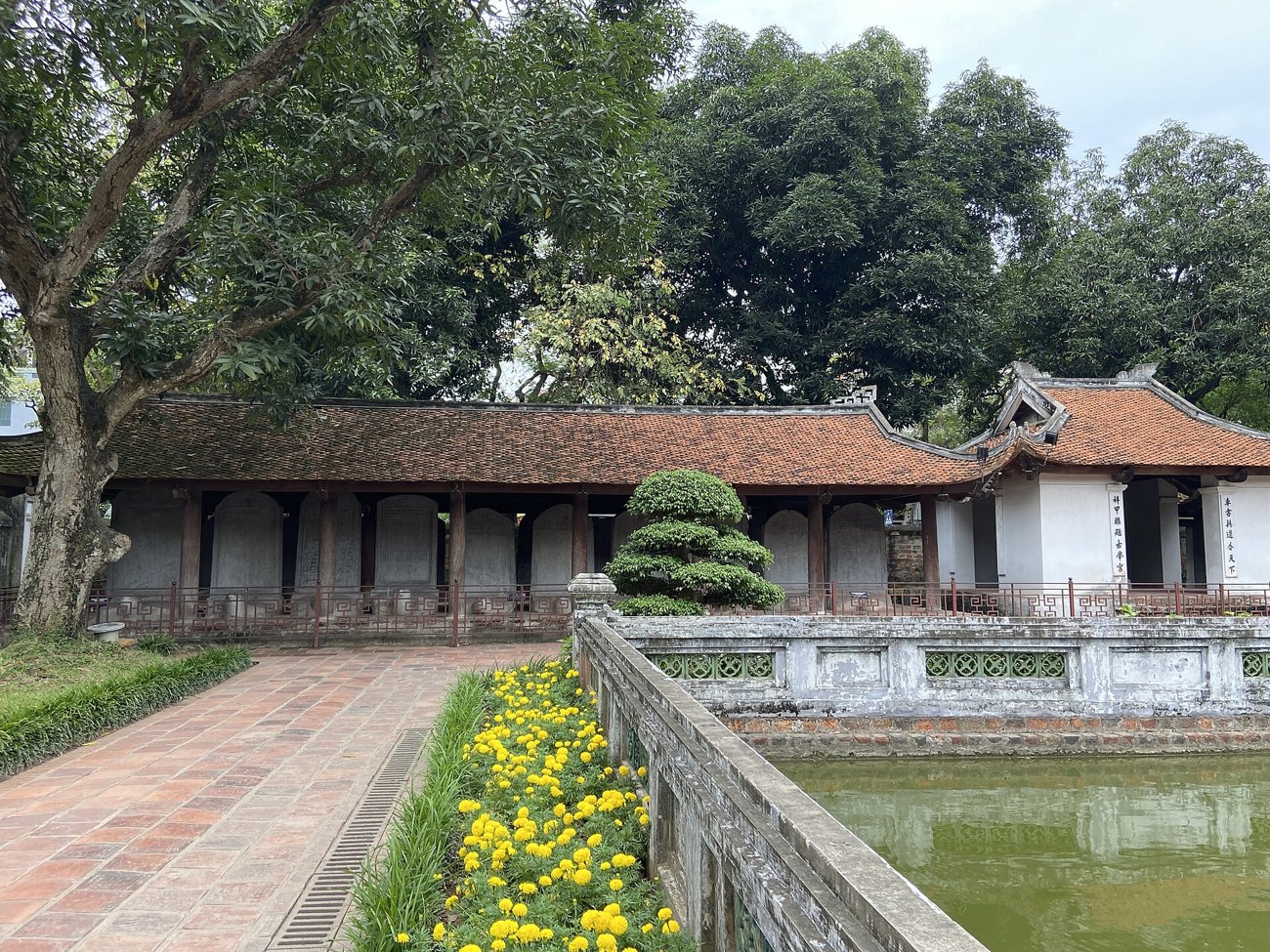
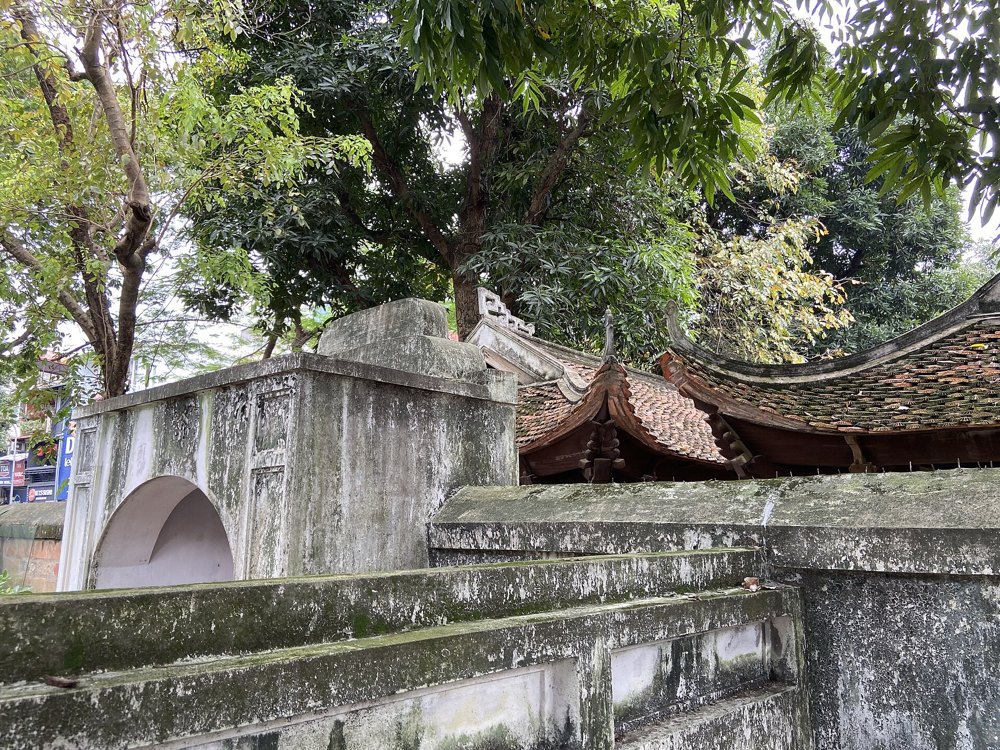
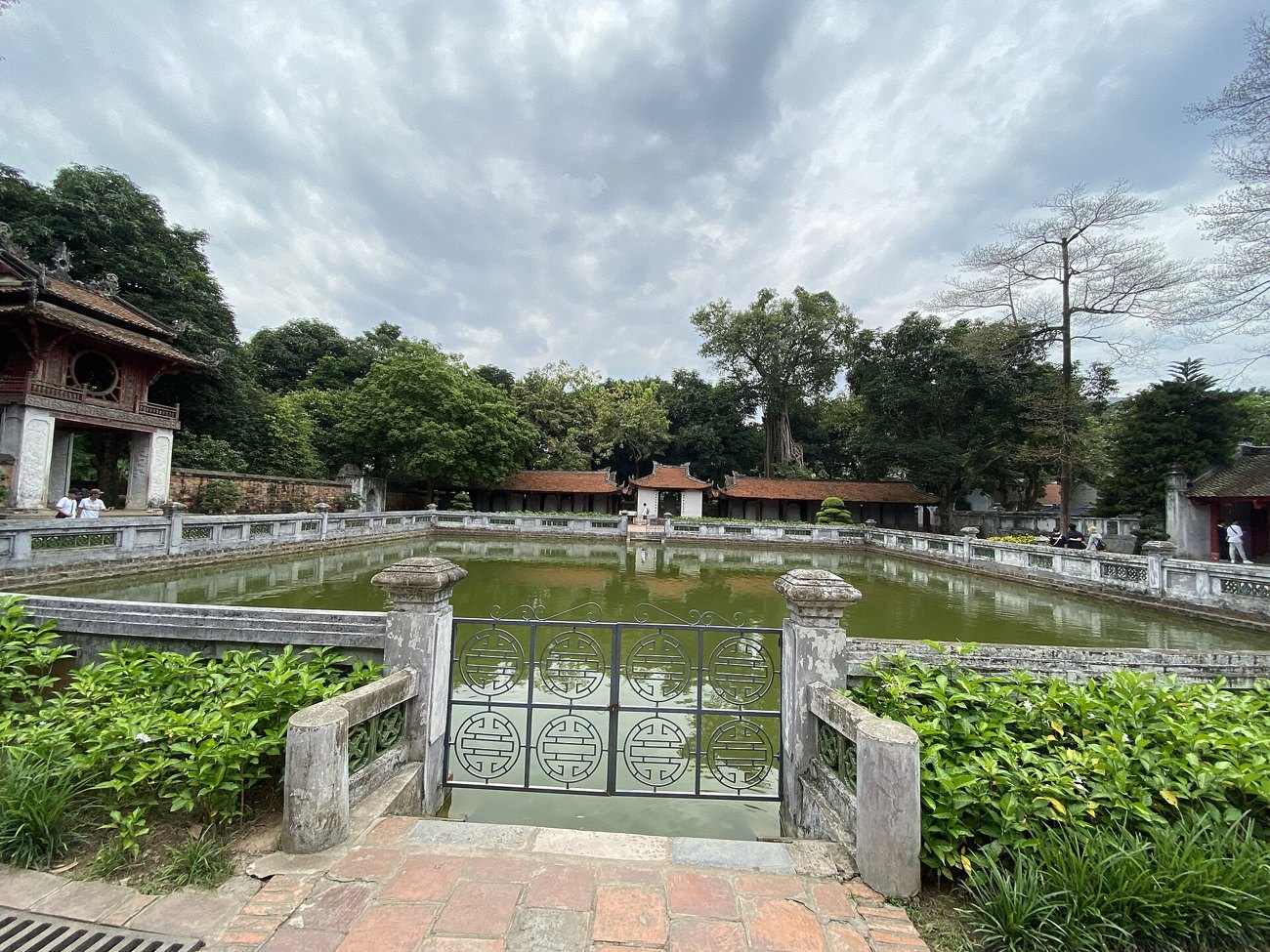
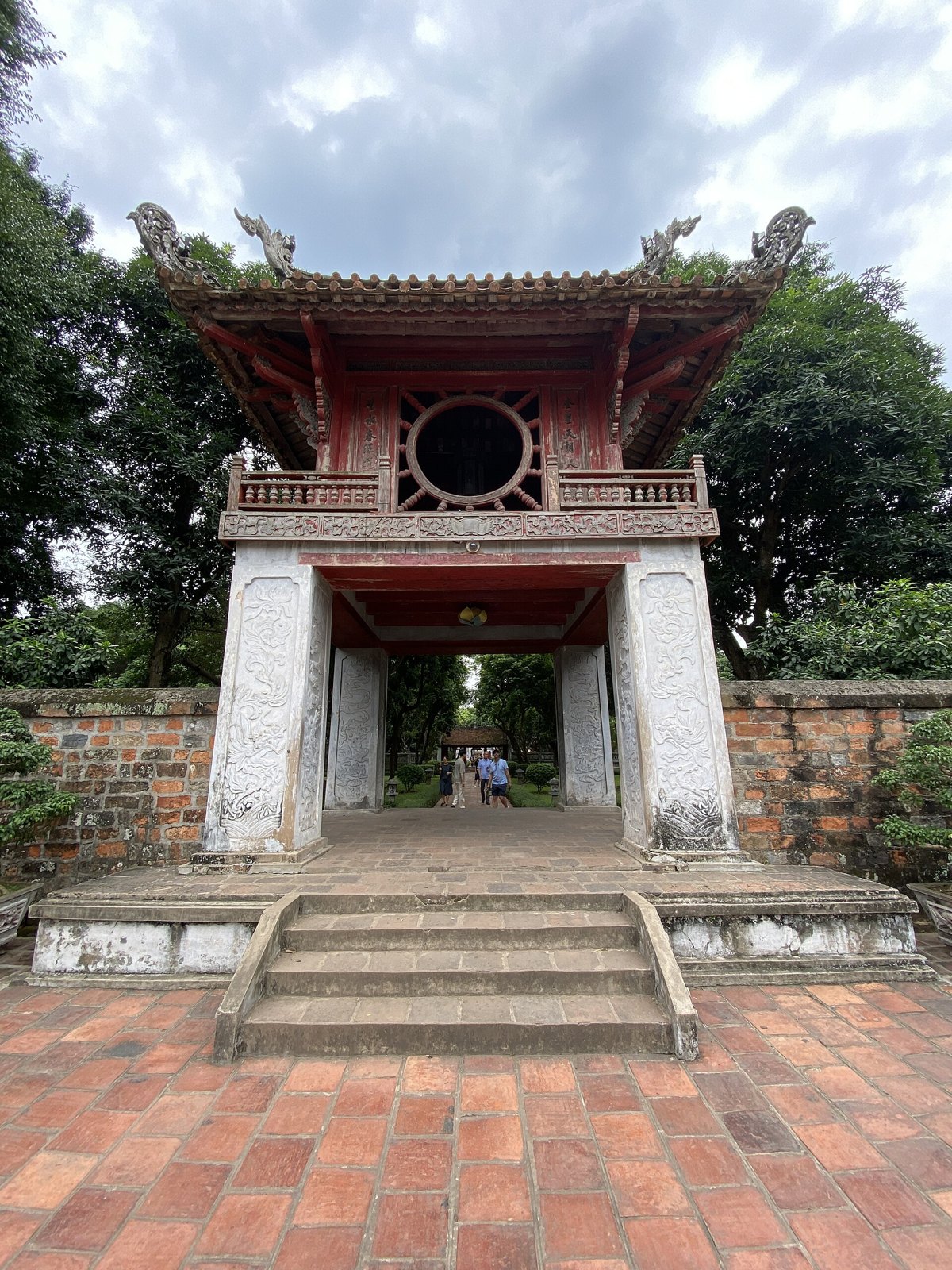
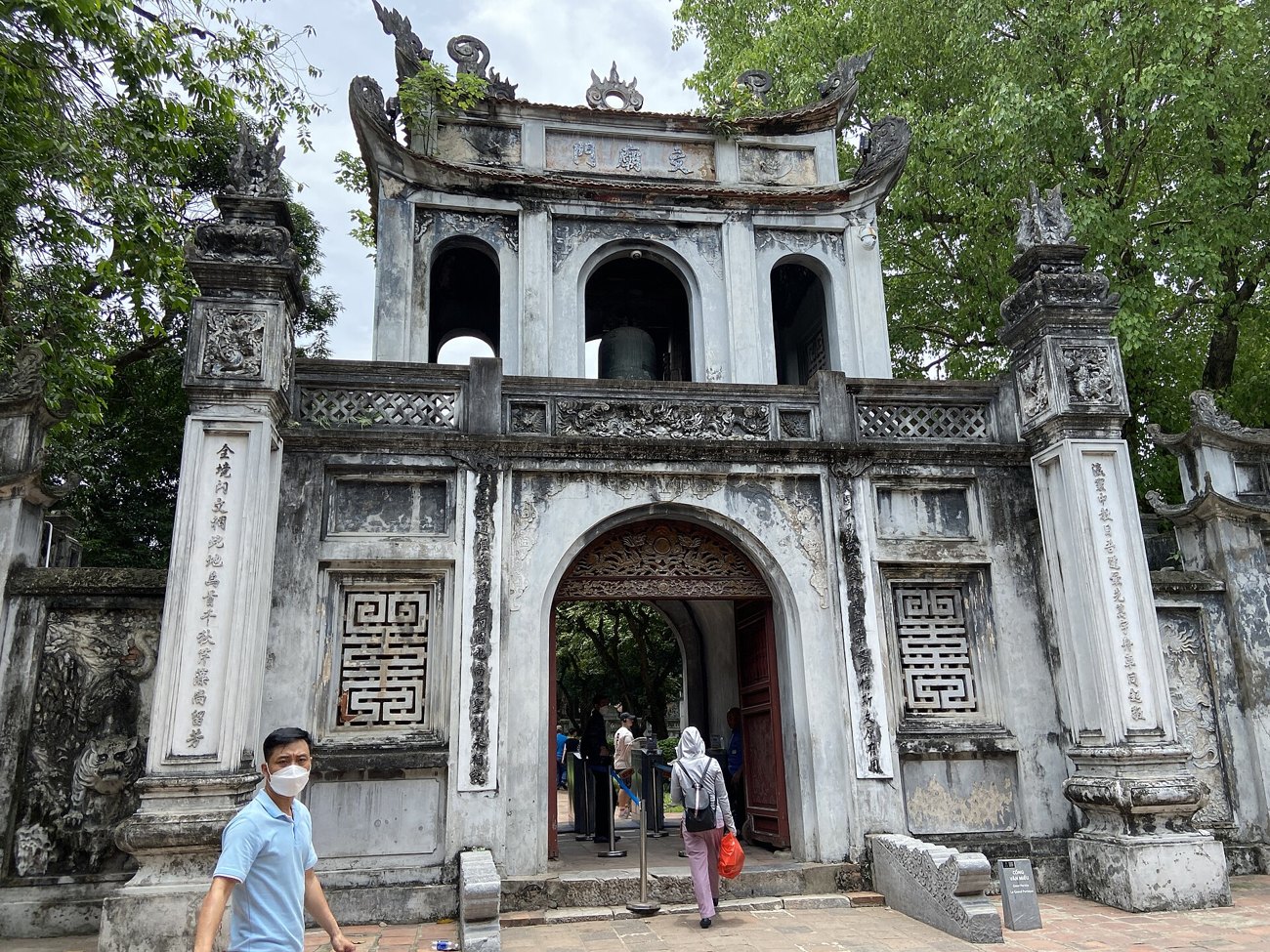
| 4. Walk or ride to the Temple of Literature (Van Mieu) | Vietnam’s first national university, founded in the eleventh century, built around five courtyards. | About 2 km from Ba Dinh Square. The Temple of Literature closes over lunch, so arrive in the late morning before the midday gap, or plan to arrive after it reopens in the afternoon. |
The Temple of Literature’s eighty-two stone stelae, each resting on a carved stone turtle and recording the names of doctoral graduates from past examinations, are inscribed on UNESCO’s Memory of the World Register — a UNESCO designation for documentary heritage, separate from the World Heritage List, and worth reading as what it is: UNESCO’s own description of why the stelae matter, not a marketing line. Details are on UNESCO’s own site. For the mausoleum’s current hours and closure calendar, Vietnam’s national tourism portal is the place to check before setting out: Vietnam National Administration of Tourism.
Ba Dinh is spread wider than the Old Quarter, and pavements here carry less of the market-stall crowding but no fewer motorbikes at the crossings — the approach is the same one covered in how to cross the road in Hanoi without panicking: a steady pace, no stopping mid-road, no running.

Cluster 2: Hoan Kiem Lake and the Old Quarter
This cluster has gentler hours — nothing here closes mid-morning the way the mausoleum does — but it rewards a similar discipline, because the Old Quarter’s streets are busiest and most legible in sequence rather than wandered at random.
| Stop | What it is | Timing note |
|---|---|---|
| 1. Hoan Kiem Lake and Ngoc Son Temple | The lake the city centers on; Ngoc Son Temple sits on a small island reached by a red wooden bridge, the Huc Bridge. | Open daily through the day; a morning visit avoids the heaviest midday heat and the evening pedestrian-street crowds. |
| 2. Dong Xuan Market | Hanoi’s largest covered market, on the northern edge of the Old Quarter. | Trading is heaviest in the morning; wholesale activity thins by afternoon. |
| 3. The Old Quarter’s trade streets (the “ba mươi sáu phố phường”) | Streets historically named for the single trade once sold there — Hang Bac for silver, Hang Gai for silk, Hang Ma for paper offerings among them. | No fixed hours; this is a walk, not a sight with a gate. |
| 4. St Joseph’s Cathedral | Hanoi’s Catholic cathedral, completed in 1886, built in a neo-Gothic style. | Viewed from outside between services; the interior is not generally open to casual sightseeing outside Mass times. |
| 5. Hoa Lo Prison Relic | The former colonial-era prison, later used to hold American prisoners of war, now a museum with graphic reconstructions of its colonial use. | Keep for later in the day; it has published hours of its own and is not affected by the morning rush at the lake or market. |
Money matters more in this cluster than in the other two, because the market stalls, street kitchens and temple donation boxes are cash-only even where a nearby hotel takes cards. The two notes that cause the most confusion — the 20,000 and 500,000 dong notes — are both blue polymer, a detail covered at Hanoi money: the 20,000 and 500,000 notes are both blue; count the zeros, not the color. On tipping at temples, markets and museum entries, do you tip in Vietnam? covers what is and is not expected.

Cluster 3: West Lake (Tay Ho)
West Lake is the largest lake in Hanoi and the cluster with the loosest schedule of the three — nothing here has a hard morning cutoff — but it is also the most spread out, so the walking order is about distance rather than opening hours.
- Tran Quoc Pagoda, on a small island connected by a causeway, is held to be among the oldest Buddhist pagodas in Vietnam by the temple’s own tradition; it sits on the lake’s southeastern edge and is the natural first stop coming from the Old Quarter.
- Quan Thanh Temple, a Taoist temple dedicated to one of the four guardian deities of old Thang Long (Hanoi’s former name), sits a short walk south of Tran Quoc, on the road dividing West Lake from the smaller Truc Bach Lake.
- The West Lake shoreline walk toward Phu Tay Ho, a temple complex on a promontory associated with the worship of the Mother Goddesses, covers several kilometres and is better split across a morning than rushed in one pass.
Because West Lake’s sights are kilometres apart rather than a few hundred meters, this is the one cluster where a short ride between stops makes more sense than walking all of it — GrabCar vs GrabBike in Hanoi sets out which is the better fit for a two-stop hop versus a longer cross-town trip.
Fitting the three clusters together
Ba Dinh and Hoan Kiem are close enough — roughly two to three kilometres — to combine in one day if the mausoleum’s morning window is respected and nothing else is scheduled before it. West Lake sits further north again and is more naturally its own half-day, either before the other two clusters start or as a separate outing. None of the three require any paid transport beyond the odd ride between them: most of what matters in each cluster is free or nearly free to enter, a pattern covered at length in eleven free things in Hanoi, and their exact hours. The wider Landmarks & Sights archive has further detail on individual buildings within each cluster: landmarks and sights.
The thing that actually slows a reader down in any of the three clusters is rarely money or distance — it is the first kerb. The method is the same everywhere in the city: step off at a steady, even pace, do not stop halfway and do not run, and let the traffic solve for where you will be rather than where you are. It is worth reading once, properly, before the first morning out: how to cross the road in Hanoi without panicking.



Access Hanoi is an independent guide written from published, checkable sources. We have not visited the places described here and we do not publish personal recommendations or invented ‘local favorites’ — where something is singled out as notable, we say who says so. Opening times, fares, closures and prices change at short notice, so treat everything here as a starting point and confirm with the museum, operator or venue directly before building a day around it. We give no advice on visas, insurance, health or safety; use your own government’s official guidance for those.
Featured image: Photo by Ltn12345, source, CC BY-SA 4.0
