The short answer
Cover your shoulders and knees before you go to any of the three. That one rule works everywhere. What changes is how hard it gets enforced. The Mausoleum turns away bare knees at the gate. The Cathedral barely checks outside Mass. Pagodas mostly watch the space right in front of the altar, not the whole building.
Why the rule exists at all
None of these sites is a beach or a bar. Ho Chi Minh’s mausoleum is a state monument guarded by soldiers. St Joseph’s Cathedral (Nhà Thờ Lớn) is a working church. A pagoda (chùa) is an active place of worship, not an exhibit. Covering shoulders and knees is the baseline expected at all three. Long trousers or a skirt below the knee, plus a top that covers the shoulders, clears every one of them without extra thought. Vietnam’s national tourism authority lists modest dress as standard guidance for religious and state monuments across the country — a useful benchmark if you’re unsure what counts.
The Mausoleum: enforced at the gate, no exceptions
This is the strict one. Ho Chi Minh’s mausoleum sits on Ba Dinh Square, and entry means a security line staffed by soldiers, not ticket clerks. Shorts get turned away before you reach the building. Staff also hold bags, cameras and phones at a counter near the entrance; nothing goes in with you except what you’re wearing. Security procedure is exactly the kind of detail that shifts without notice, so confirm the current rules on phones and photography with the mausoleum’s own management board before you go.
The Mausoleum is also free, morning-only, and closed on particular days — a separate problem from dress, covered in this site’s guide to Hanoi’s free sights and their exact hours.


The Cathedral: rarely checked outside Mass
St Joseph’s Cathedral, near Hoan Kiem, is open to visitors for much of the day and holds Mass on a published schedule. Outside Mass times, enforcement is loose. Visitors in shorts or sleeveless tops are commonly not stopped at all. That’s not a guarantee — a stricter staff member on a different day is entirely possible — but the general pattern is far more relaxed than at the Mausoleum. During Mass, ordinary church etiquette applies: quiet, modest dress, no wandering through the nave mid-service.
The pagodas: enforced near the altar, not at the door
A pagoda rarely has a security line at all. Most run on trust. A caretaker or monk may only ask a visitor to cover up once they’re near the main altar, where incense is lit and offerings are made. Outer halls and courtyards tend to be more relaxed. This varies by pagoda and by who’s on duty that day, so the safer move is the same baseline, applied from the gate rather than improvised once someone raises an eyebrow.

If you get turned away: the sarong vendors
At the Mausoleum specifically, a wardrobe failure doesn’t mean turning around and going home. Vendors operate right outside the entrance gate, selling simple wrap-around sarongs long enough to cover bare legs. Prices reported by visitors typically sit somewhere around 40,000–60,000 VND, though treat that as a starting point for negotiation, not a fixed tag — and confirm current figures yourself, since nothing here is checked against a live price list. Remember that Vietnam’s 20,000 and 500,000 notes are both blue polymer, so count the zeros before handing one over. This trade exists at the Mausoleum because the volume of visitors and the strictness of the check make it worth a vendor’s time. It is far less reliable, or simply absent, outside the Cathedral and most pagodas.
Footwear, hats and the rest
None of the three sites has a formal footwear rule for visitors. Flat, closed shoes make sense for the walk across Ba Dinh Square and the road crossings around it, which this site covers separately in its guide to crossing the road in Hanoi. Hats come off inside the Mausoleum by convention rather than a posted sign, and most visitors remove them without being asked.
Planning the day around the dress code, not the opening hours
The Mausoleum carries the hard deadline: mornings only, closed on specific days, and shut for several weeks most years for maintenance, with dates announced late. Any day plan has to put it first, or leave it out — the logic behind this site’s guide to Hanoi’s three sight clusters and how to walk each one. Dress for the Mausoleum before leaving the hotel. The sarong vendors are a backup, not a plan.
More on what Hanoi’s major sights actually hold, and how they’re organized, is in the Landmarks & Sights archive. For cash handling beyond the sarong vendors, see the Money & Language archive.
Access Hanoi is an independent guide written from published, checkable sources. We have not visited the places described here and we do not publish personal recommendations or invented ‘local favorites’ — where something is singled out as notable, we say who says so. Opening times, fares, closures and prices change at short notice, so treat everything here as a starting point and confirm with the museum, operator or venue directly before building a day around it. We give no advice on visas, insurance, health or safety; use your own government’s official guidance for those.
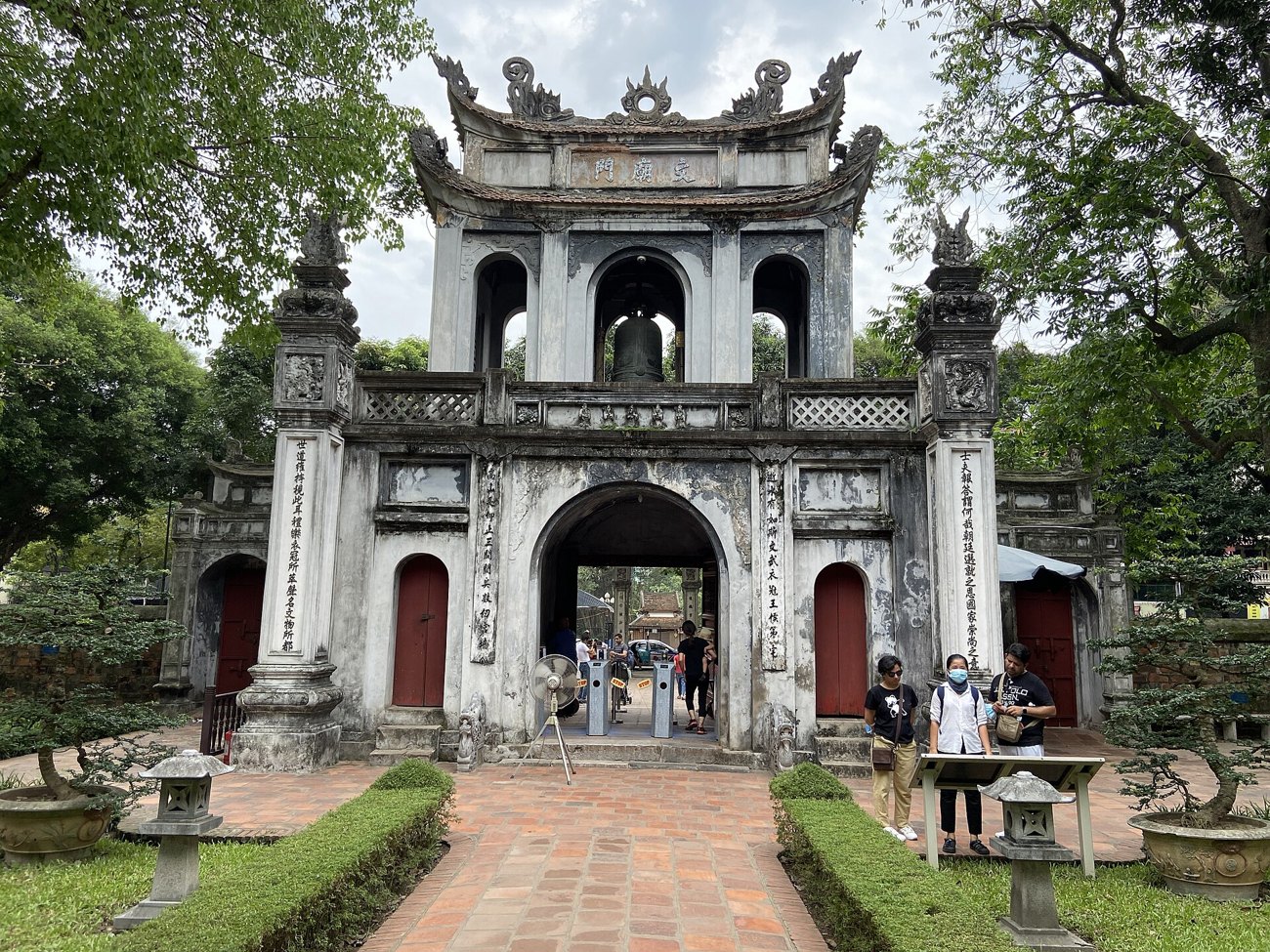
Featured image: Photo by Ltn12345, source, CC BY-SA 4.0
