Eleven places and rituals in Hanoi cost nothing to see, but “free” here is a time slot, not a permanent state. A market hall, a pedestrian street or a mausoleum forecourt is free only during the specific hours its managing body has set for it, and outside that window several of them are simply not happening — fenced off, trading as ordinary traffic, or shut. Below is what each thing actually is, and when.
1. The flag ceremony at Ba Dinh Square
Ba Dinh Square (Quảng trường Ba Đình) is an open public square and free to stand in at any hour. The daily flag-raising and flag-lowering ceremony performed there by a military honour guard is the specific free event most visitors are after, and Vietnamese state media has long reported it running at roughly 06:00 and 21:00. Treat those as approximate: the ceremony’s exact minute moves with sunrise and sunset through the year, so a reader planning an early start should confirm the current time rather than fix on a figure printed months ago.
2. Ho Chi Minh’s Mausoleum — the grounds, not the body
Entry to the mausoleum itself is free, but it is a morning-only operation, traditionally closed on Mondays and Fridays, and closed altogether for several weeks most years while the embalmed body undergoes maintenance abroad — dates the mausoleum’s management board announces late rather than on a fixed calendar. A visitor who plans a single day around it should put it first on the itinerary, confirm the current closed days before traveling, and dress for the line: shoulders and knees covered, shorts turned away regardless of the weather.
3. The Old Quarter’s weekend walking street
For most of the week, the core streets of the Old Quarter carry the same motorbike traffic as everywhere else and the pavement rule applies as normal — see how to cross the road in Hanoi before attempting it. On Friday, Saturday and Sunday evenings, the city closes a block of streets around Hoan Kiem (Hoàn Kiếm) to motor vehicles, turning them into a pedestrian zone that Hanoi’s tourism authorities promote as one of the city’s free weekend draws; Vietnam’s national tourism board lists walking streets as a recurring feature of several cities, Hanoi among them. The closure is set by city authorities and has historically run from the early evening into the hours before midnight — confirm the current start and end time locally, since it shifts around public holidays and has been adjusted more than once.

4. Dong Xuan Market’s daytime trading halls
Dong Xuan Market (Chợ Đồng Xuân), the largest covered market in the Old Quarter, costs nothing to walk through; browsing its aisles is not a ticketed activity. The halls trade through the day on hours each stall sets for itself, with most activity shut down by evening when vendors pack up — this is a daytime market, not an evening one.
5. The weekend night-market stalls around it
A separate, informal night market of pavement stalls sets up along the pedestrianized streets leading from Hang Dao toward Dong Xuan only on the same Friday-to-Sunday evenings as the walking street above, and packs away again at the same closing hour. Arriving on a Tuesday afternoon expecting it is the single most common version of this mistake.


6. The footpath around Hoan Kiem Lake
The lake itself and the public path around it are open around the clock, with no gate and no ticket, and this is the one entry on the list genuinely free at any hour. It is worth separating from Ngoc Son Temple (Đền Ngọc Sơn), the structure on the small island reached by The Huc Bridge — that temple charges an admission fee, so “the lake is free” does not extend across the red bridge.
7. Long Bien Bridge and the market beneath it
The pedestrian and cyclist lane on Long Bien Bridge, the Red River crossing built under French rule and rebuilt repeatedly since, is open to walk at any hour at no cost. Vietnamese press, including Việt Nam News, has repeatedly described the wholesale produce trade that happens on the riverbank beneath the bridge as heaviest in the hours before dawn — but this is vendors’ own working rhythm, not a published visitor schedule, and no authority sets fixed opening hours for it.

8. Tran Quoc Pagoda on West Lake
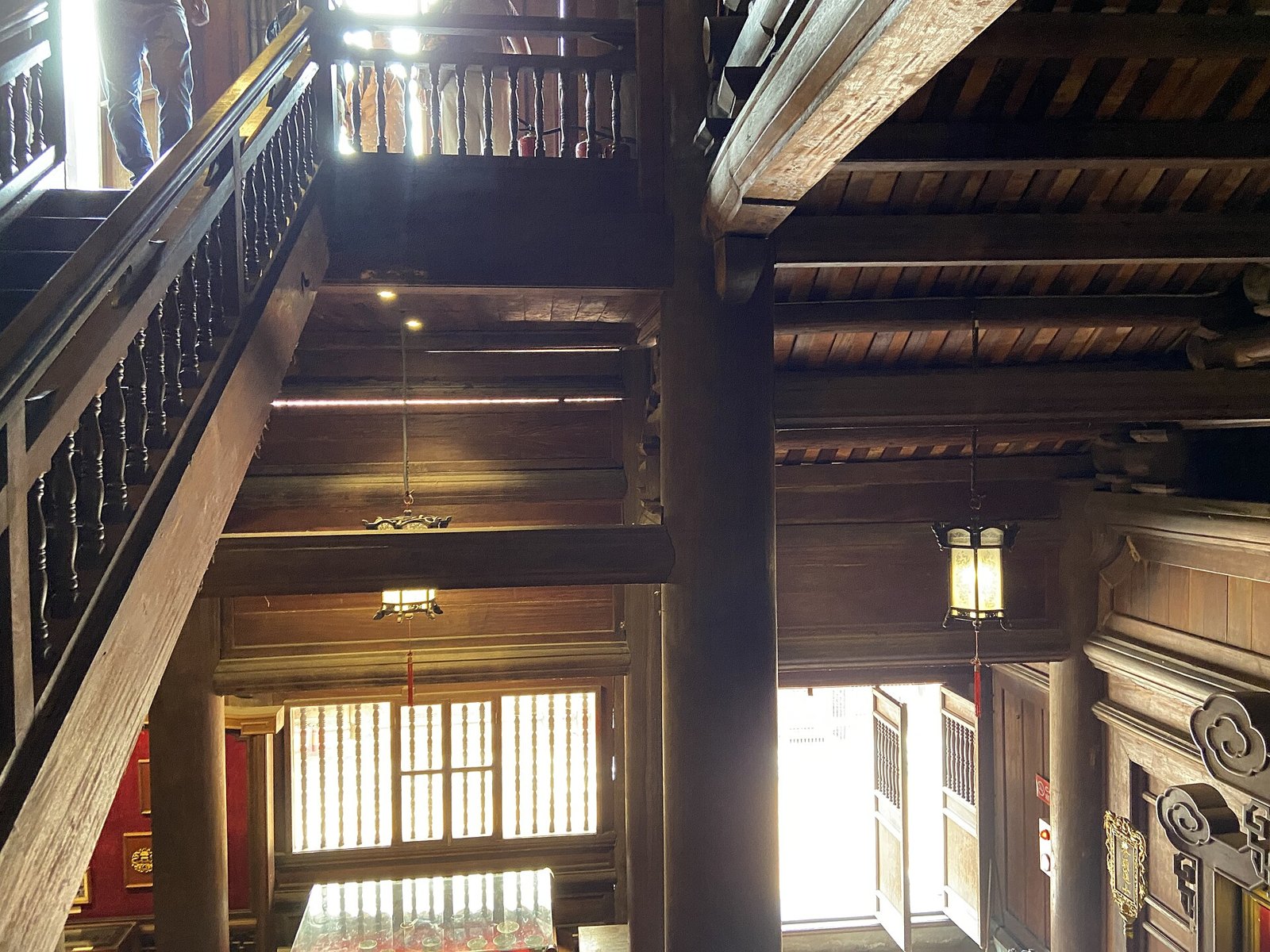
Tran Quoc Pagoda (Chùa Trấn Quốc), on a peninsula in West Lake (Hồ Tây), charges no entrance fee — the common pattern for working Buddhist pagodas in Hanoi, as against ticketed historical monuments such as Van Mieu. Grounds generally open early and close in the evening, with the gate shut for a period around midday at some temples; the specific hours are set by the pagoda’s own management rather than any city body, so checking the posted sign at the gate is more reliable than a fixed figure here.
9. Bach Ma Temple in the Old Quarter
Bach Ma Temple (Đền Bạch Mã), cited in city histories as one of the oldest religious sites in the Old Quarter, is free to enter, with a donation box rather than a ticket window — a point worth reading alongside the note on Hanoi’s banknotes, since both the 20,000 and 500,000 dong notes are blue and a donation box is not the place to confuse them. Hours follow the same daytime pattern as other small Old Quarter temples; there is no overnight access.

10. St Joseph’s Cathedral — forecourt and Mass
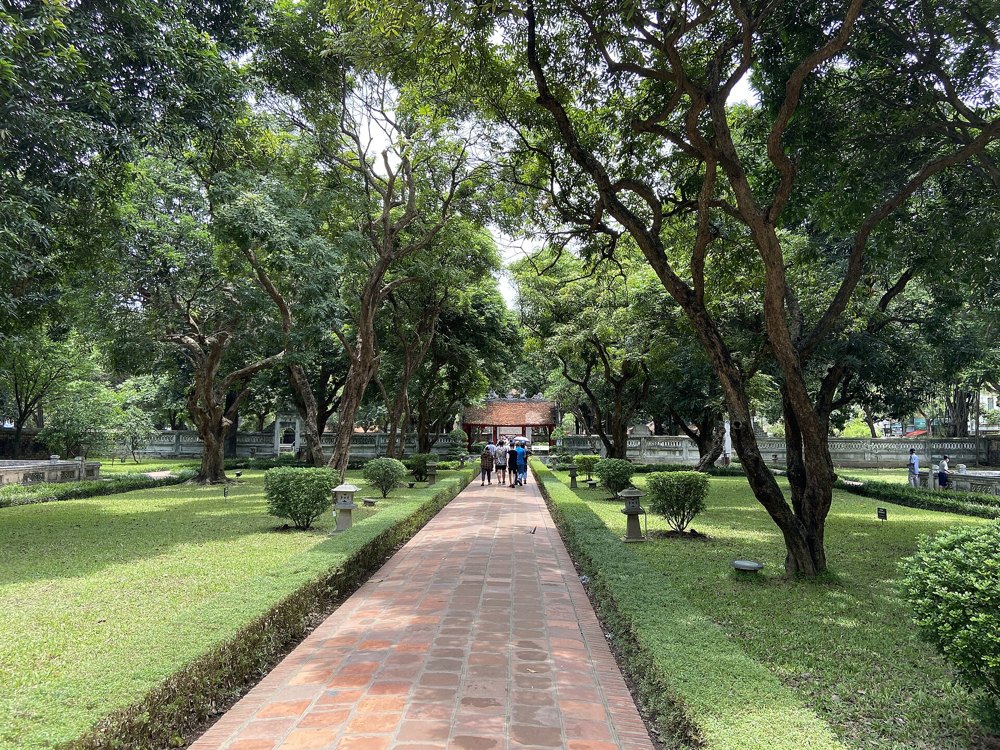
The exterior and forecourt of St Joseph’s Cathedral (Nhà Thờ Lớn) are visible from the street at any hour at no cost. Entry to the interior outside Mass is inconsistent and sometimes restricted; Mass itself is free to attend, with times set by the parish and by the Hanoi Archdiocese, differing between weekdays, Sundays and feast days. A reader wanting to see inside should check the noticeboard at the gate rather than assume a walk-in is always possible.
11. Train Street
The residential stretch of track known to visitors as Train Street costs nothing to view, but it is the least stable entry on this list on two counts. First, the trains themselves run on timetables published by Vietnam Railways, and only pass a handful of times a day — arriving outside those windows means watching an empty track. Second, Vietnamese outlets including VnExpress International have reported recurring rounds of cafes along the line being closed by police for safety reasons and others opening in their place, so the specific address treated as the “viewing spot” has changed more than once. Confirm train passage times against the operator’s current timetable rather than any cafe’s claim, and expect the access points themselves to have moved since the last article that named one.
What ties these together
None of the eleven needs a ticket. Several of them need a clock. The pattern worth carrying into the rest of a Hanoi trip is the same one that applies to transport and money here: the structure is public and durable — a square, a bridge, a market hall — but the operating hours sit with whoever runs the thing day to day, and that is exactly the kind of detail that goes stale fastest. For getting between these eleven points, walking covers the Old Quarter and lakeside cluster; for the longer hops to West Lake or back from Long Bien at odd hours, see the comparison of GrabCar and GrabBike and the wider Getting Around archive. How this page sources and checks what it claims is set out on the about page.
Access Hanoi is an independent guide written from published, checkable sources. We have not visited the places described here and we do not publish personal recommendations or invented ‘local favorites’ — where something is singled out as notable, we say who says so. Opening times, fares, closures and prices change at short notice, so treat everything here as a starting point and confirm with the museum, operator or venue directly before building a day around it. We give no advice on visas, insurance, health or safety; use your own government’s official guidance for those.
Featured image: Photo by Ltn12345, source, CC BY-SA 4.0
