Hanoi's centre is small. From Dong Xuan Market at the top of the Old Quarter to the Opera House
at the bottom of the French Quarter is about half an hour on foot, and almost everything on this
site sits inside that walk. What surprises people is not the distance — it is the surface.
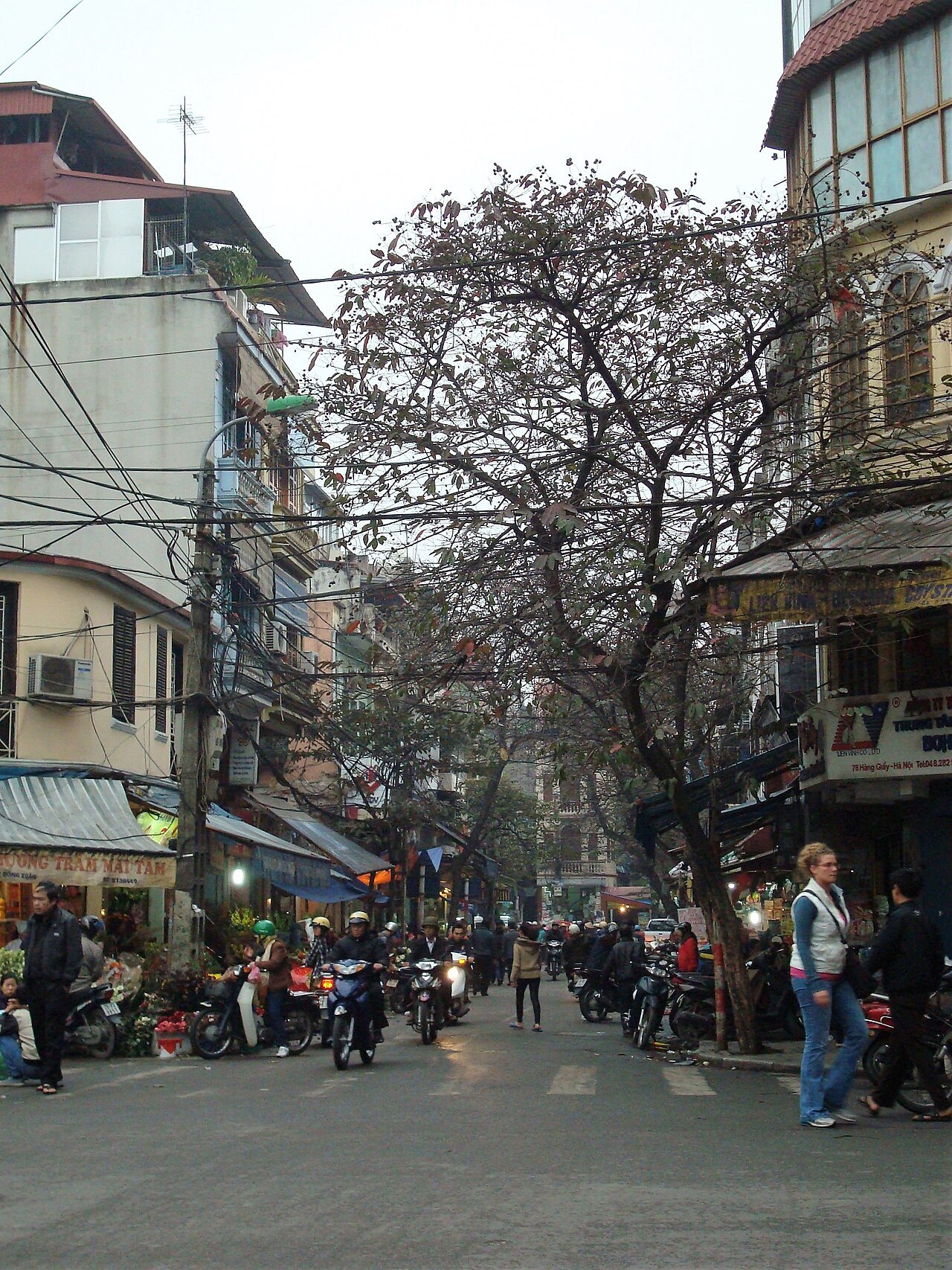
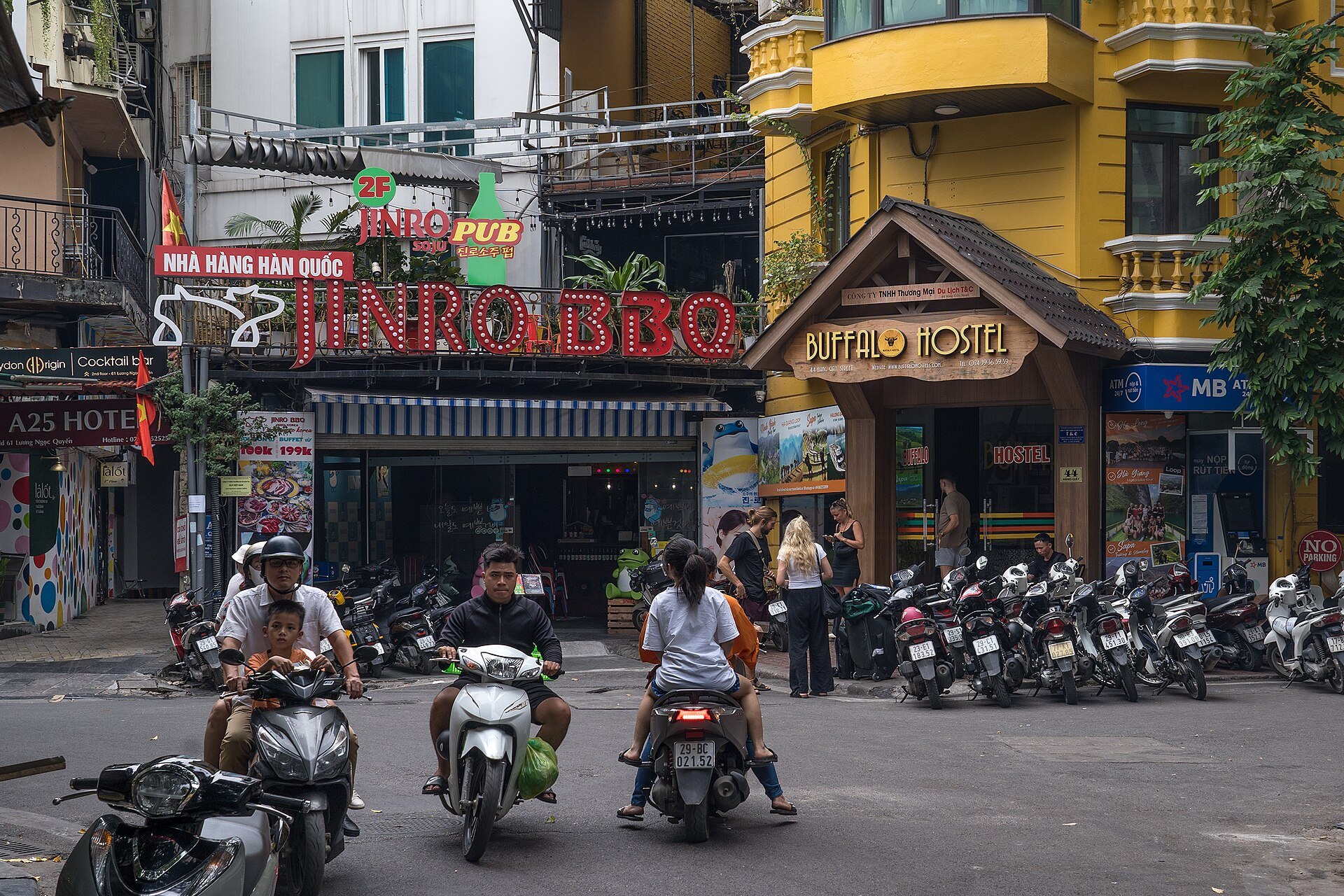
The footpath here is not primarily for walking. It is where the city trades, cooks, repairs
things, parks its motorbikes and sits down to eat, and it is full. So pedestrians walk in the
traffic lane at the edge of the road, and drivers expect them to. Keep a straight line, keep an
even pace, and let the traffic come around you.
Photograph by Hector Garcia from Barcelona, Catalonia, Spain, Wikimedia Commons, CC BY-SA 2.0
⚠️ Crossing the road is the one skill this city asks of you
There is rarely a gap, and waiting for one does not work. The technique is the same everywhere
in Vietnam and it takes one block to learn:
Step off and walk slowly and steadily. Do not hesitate. Motorbikes read your
speed and steer around where you are going to be.
Do not stop in the middle, and do not run back. Both of those break the
prediction everyone else is making, and both are what causes accidents.
Cars and buses do not do this. They cannot swerve and they will not. Cross
behind them, never in front.
Walking beside a local going the same way is the easiest first attempt, and nobody minds.
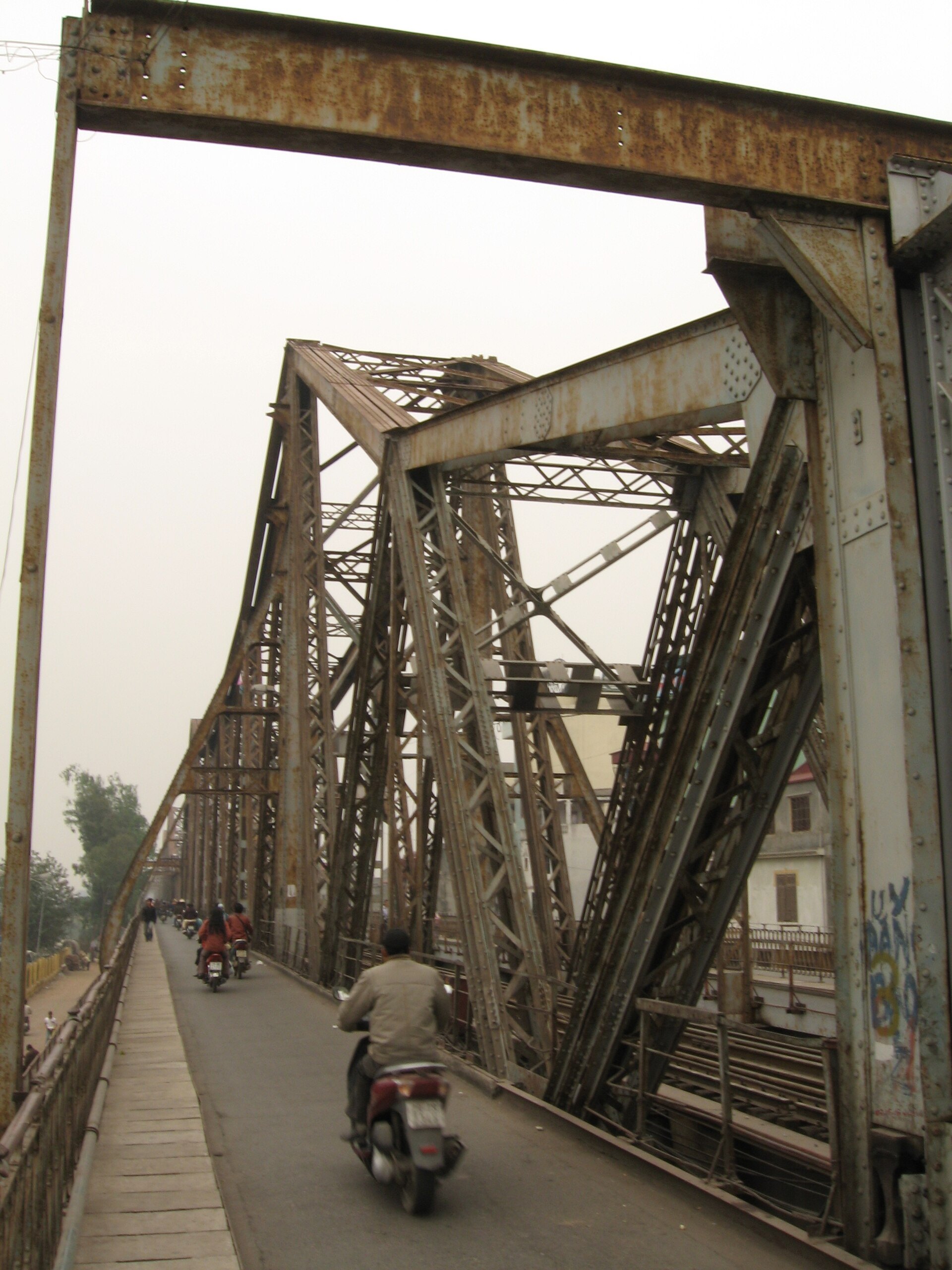
Photograph by Brian Johnson & Dane Kantner, Wikimedia Commons, CC BY-SA 2.0
⚠️ The metro exists and it will probably not help you
Hanoi has two elevated lines — Cát Linh–Hà Đông, and the first stretch of Nhổn–Hanoi Station.
They are clean, cheap and genuinely useful if you live along them. Neither serves the Old Quarter,
Hoan Kiem Lake or the airport, which is to say neither serves a visitor. Do not build a day around
the metro here the way you would in Seoul or Shanghai.
Motorbike taxis, cars and the app
Ride-hailing is how most visitors move when they are not walking, and it removes the two things
that go wrong on the street: the price and the address. You can order either a car or a motorbike
seat. The motorbike is faster in the Old Quarter by a wide margin, and the driver carries a helmet
for you.
⚠️ A metered taxi flagged on the street is fine if the meter is running. If it is not,
the fare is a negotiation you will lose. The app removes that conversation entirely.
⛔ Cyclos — the three-wheeled pedal rickshaws around the lake — are a tourist ride, not
transport, and the price is agreed in advance or not at all. Agree it, out loud, before you sit
down.
A metered taxi in Hanoi should show a running fare from the moment the car pulls away, calculated by distance and time. A cyclo has no meter at all. Its price is whatever the rider agrees before getting in. Confusing the two, or trusting the wrong livery, is where visitors lose money. How a taxi … Read more
Hanoi has two working metro lines. Neither one reaches the Old Quarter, Hoan Kiem (Hoàn Kiếm) Lake or Noi Bai (Nội Bài) Airport. They were built to connect outer districts to the center, not to serve visitor sights, so for most itineraries a metro ride adds a transfer rather than replacing one. This article goes … Read more
GrabCar is a private car booked through the app, priced and matched like a metered taxi. GrabBike is a motorbike taxi, ridden pillion, that can filter through traffic and reach places a car cannot. The right choice in Hanoi often has nothing to do with comfort or cost — it comes down to whether the … Read more
Step off the kerb, walk at a slow and even pace, and do not stop. Motorbikes read your speed and steer around where you will be, not where you are standing. That single habit gets a visitor across most Hanoi streets. It does not work everywhere, and this page is about the streets where it … Read more