What the four guardian temples actually are
Hanoi’s founding myth assigns one temple to each compass point of the old citadel of Thang Long, each holding a spirit believed to protect the city from that direction: Quan Thanh (Đền Quán Thánh) to the north, Bach Ma (Đền Bạch Mã) to the east, Voi Phuc (Đền Voi Phục) to the west, and Kim Lien (Đền Kim Liên) to the south. Only two of the four are reliably open and worth a dedicated visit today — the other two are a locked neighborhood shrine and a site whose own location is disputed. This article says which is which.
The myth behind the four directions
The story attaches to Ly Thai To, the king credited with founding Thang Long — the earlier name for Hanoi — in 1010. Vietnamese tradition holds that four temples were established at the cardinal points of the citadel, each honoring a tutelary spirit asked to guard the new capital from that direction. The pairing of temple and direction is fixed in the tradition even where the temples themselves have moved, shrunk, or been rebuilt over a thousand years of war and urban change:
- North — Quan Thanh: Huyen Thien Tran Vo, a Taoist deity of the north associated with water and order.
- East — Bach Ma: Long Do, the guardian spirit of the land itself, tied directly to the founding of the citadel.
- West — Voi Phuc: Linh Lang, a prince of the Ly dynasty venerated as a military protector.
- South — Kim Lien: Cao Son Dai Vuong, a mountain spirit from older Vietnamese mythology.
That symmetry — one deity, one direction, one temple — is the version every article about this subject repeats. It is also, on the ground, no longer an accurate description of what a visitor will find.
The reality check: what a half-day visitor should know
The four sites are not comparable in scale, access, or condition. Two function as major, regularly visited religious sites with predictable opening hours. One is a small shrine that is frequently locked outside of festival dates. One exists, confusingly, in two competing physical forms. A reader with limited time is better served by an honest ranking than by a myth that treats all four as equal stops on a circuit.
| Temple | Direction / deity | Current condition | Worth a dedicated visit? |
|---|---|---|---|
| Quan Thanh | North — Huyen Thien Tran Vo | Large, actively maintained, daily visiting hours, major bronze statue of the deity, on the Truc Bach–West Lake shoreline | Yes |
| Bach Ma | East — Long Do | Small but intact, inside the Old Quarter on Hang Buom street, among the oldest religious structures in the city | Yes |
| Voi Phuc | West — Linh Lang | A temple of this name stands near Thu Le Park in Ba Dinh district and is generally treated by Vietnamese-language heritage accounts as the historic site, but a second structure elsewhere also uses the name, and sources differ on which should be considered original — a likely result of relocation or restoration work over the centuries | Only if the discrepancy itself interests you |
| Kim Lien | South — Cao Son Dai Vuong | A modest communal shrine on a low mound in Dong Da district, with irregular access and no standing expectation that it will be open outside festival dates | No, unless already in the neighborhood |
The practical consequence: a visitor with half a day for this subject sees Quan Thanh and Bach Ma and treats Voi Phuc and Kim Lien as historical footnotes rather than a checklist. That is a defensible choice, not a shortcut — the “sacred quartet” framing describes a medieval plan, not four equally functioning temples in the present city.


Quan Thanh: the one on the lake
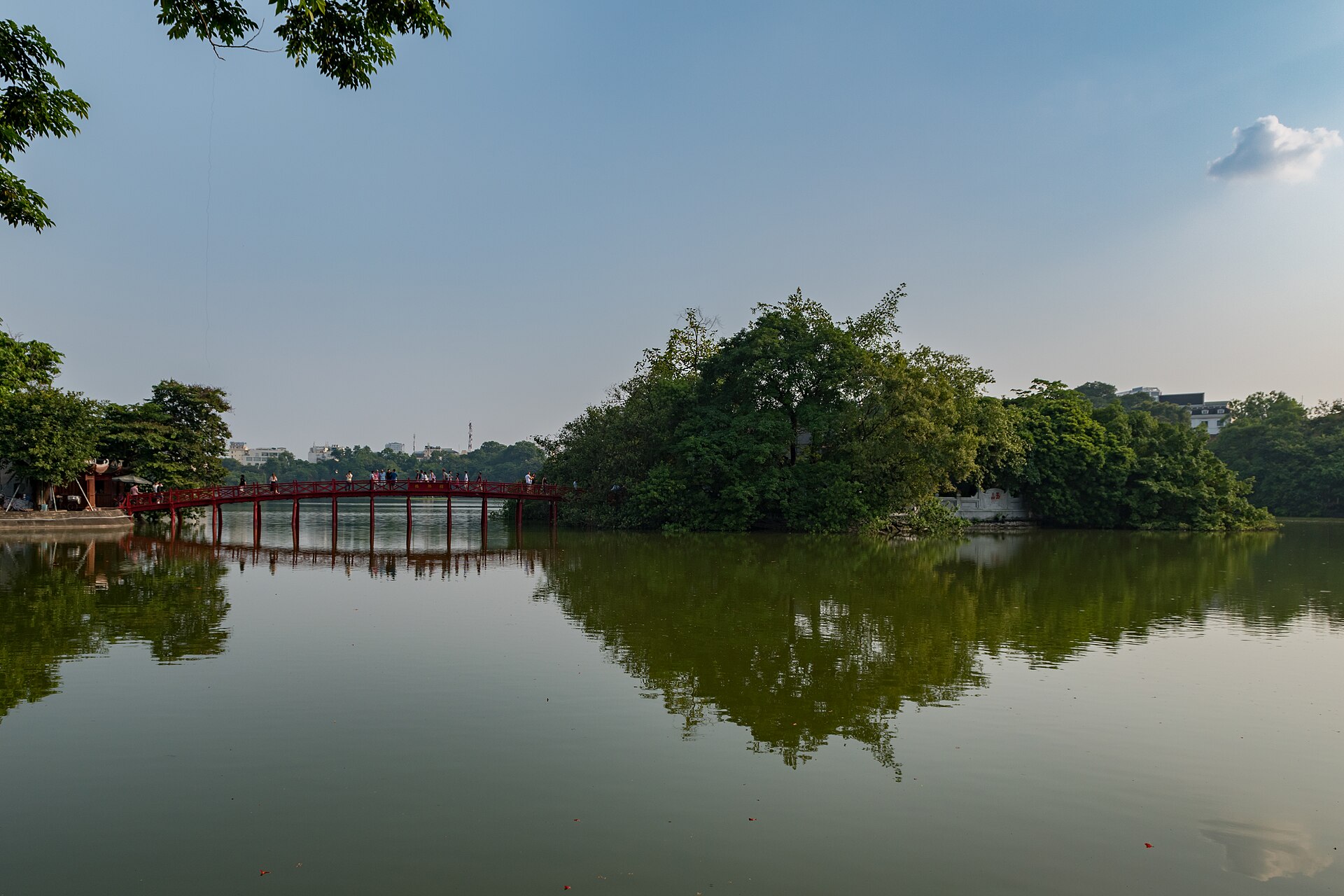
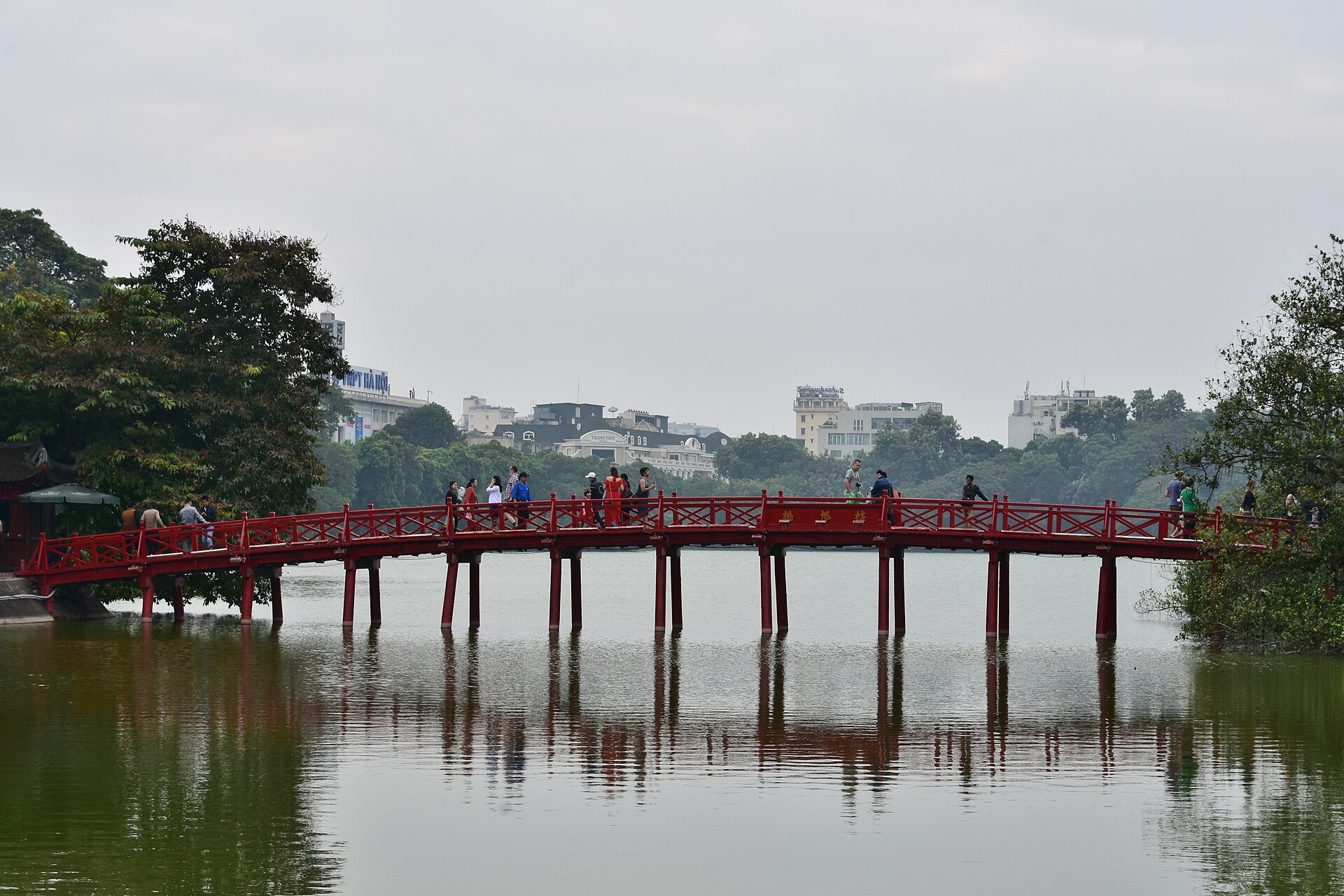
Quan Thanh sits on the southern shore of West Lake (Ho Tay), at the point where it meets the smaller Truc Bach lake, a short walk from Thanh Nien road. It is dedicated to Huyen Thien Tran Vo, one of four Taoist deities assigned to guard the cardinal directions in Chinese-derived cosmology, here positioned as guardian of the north. The temple holds a large bronze statue of the deity, cast in the seventeenth century according to the temple’s own site history, and is counted among Vietnam’s officially recognized historical-cultural relics. Hanoi’s tourism authorities list it as one of the city’s major religious sites, alongside the lake itself — see the Hanoi Department of Tourism for current visitor information.
Bach Ma: the oldest claim in the Old Quarter
Bach Ma stands on Hang Buom street, deep in the commercial grid of the Old Quarter, and Vietnamese tradition treats it as the oldest of the four — some accounts tie its founding directly to Ly Thai To’s decision to move the capital here. The resident spirit, Long Do, is described in temple tradition as the guardian of the land on which the citadel was built, appearing to the king in the form of a white horse (bach ma) whose hoofprints marked out where the city walls should run. The scale is modest compared to Quan Thanh, but its location inside the Old Quarter — see our guide to the sight clusters of central Hanoi — means it costs nothing in extra walking to include.

Voi Phuc: a disputed west
The western temple is the one where the tidy version of the story breaks down. A Voi Phuc Temple near Thu Le Park, in Ba Dinh district, is the site most commonly treated as the historic guardian temple of the west, honoring Linh Lang, a Ly-dynasty prince credited with a military victory. A second site elsewhere in the city also carries the Voi Phuc name, and Vietnamese-language heritage writing is not unanimous about which should be considered the original foundation — a situation that most likely reflects relocation, rebuilding, or a split in local tradition over the centuries rather than a simple error. A visitor chasing the “complete” set of four should know this before setting out, since the two candidate sites are not close together and neither can be confirmed here as definitively the one meant by the founding story.
Kim Lien: the one that’s usually locked
Kim Lien, the southern temple, is the smallest and least visited of the four. It stands on a low mound in what is now Dong Da district, built in honor of Cao Son Dai Vuong, a mountain spirit from pre-Buddhist Vietnamese belief rather than the Taoist or dynastic figures of the other three. Local and heritage accounts describe it as functioning more as a neighborhood communal shrine than a destination temple, with access that depends on caretakers being present and activity concentrated around festival dates rather than daily visiting hours. Travelers determined to see all four should expect Kim Lien to be the one that requires the most luck, and should not build a schedule around arriving there at a fixed time.
Reading the names correctly
All four buildings use the word đền, not chùa — a distinction that matters in Vietnamese religious architecture and is explained in full in our guide to what chùa, đền and đình actually mean. A đền honors a historical figure or spirit elevated to deity status, which is exactly the category all four guardian temples fall into, as distinct from a chùa, which is a Buddhist pagoda.
Visiting: etiquette, timing and cash
All four sites are active places of worship, not museums, and the expectations around dress and behavior are consistent across them — covered shoulders and knees, quiet voices in the inner sanctuaries, no stepping over offerings laid on the floor. Our breakdown of temple etiquette in Hanoi, ranked by how strictly each rule is actually enforced, is a useful read before any of the four. Activity at all of them — incense, offerings, local visitors — rises sharply around the first and fifteenth days of the lunar month, a pattern covered in our guide to visiting Hanoi on a lunar festival day; checking the lunar calendar before a visit avoids both an unexpectedly crowded temple and an unexpectedly quiet one. None of the four temples take cards: bring small-denomination cash, and remember that the 20,000 and 500,000 dong notes are the same blue — our guide to telling Hanoi’s banknotes apart is worth a read before any temple where you might make an offering.
Getting between the four
Quan Thanh and Bach Ma are each within Hanoi’s walkable core — Quan Thanh on the West Lake shoreline, Bach Ma inside the Old Quarter — and the walk itself means crossing streets with no marked pedestrian priority. See how to cross the road in Hanoi without panicking for the method that actually works: a slow, steady pace, no stopping, no running. Voi Phuc and Kim Lien sit further out and in different districts from each other, with no direct public transit link between them; a ride-hailing app is the practical way to cover the distance, as explained in our comparison of GrabCar and GrabBike in Hanoi. For context on the broader category these sites sit within, our Temples & Pagodas archive and Landmarks & Sights archive cover related Hanoi sites in more depth, including how to sequence a visit across the Itineraries archive.
For current information on Hanoi’s officially designated historical relics, including the two most-visited of these four temples, Vietnam’s national tourism body publishes overview material at Vietnam.travel. This article describes what each site is and how it is classified; it does not set or confirm opening hours, which change and should be checked against the operator or the site itself on the day of your visit. For how this site sources and checks what it publishes, see About Access Hanoi, and for what is collected when you read it, our privacy policy.
Access Hanoi is an independent guide written from published, checkable sources. We have not visited the places described here and we do not publish personal recommendations or invented ‘local favorites’ — where something is singled out as notable, we say who says so. Opening times, fares, closures and prices change at short notice, so treat everything here as a starting point and confirm with the museum, operator or venue directly before building a day around it. We give no advice on visas, insurance, health or safety; use your own government’s official guidance for those.
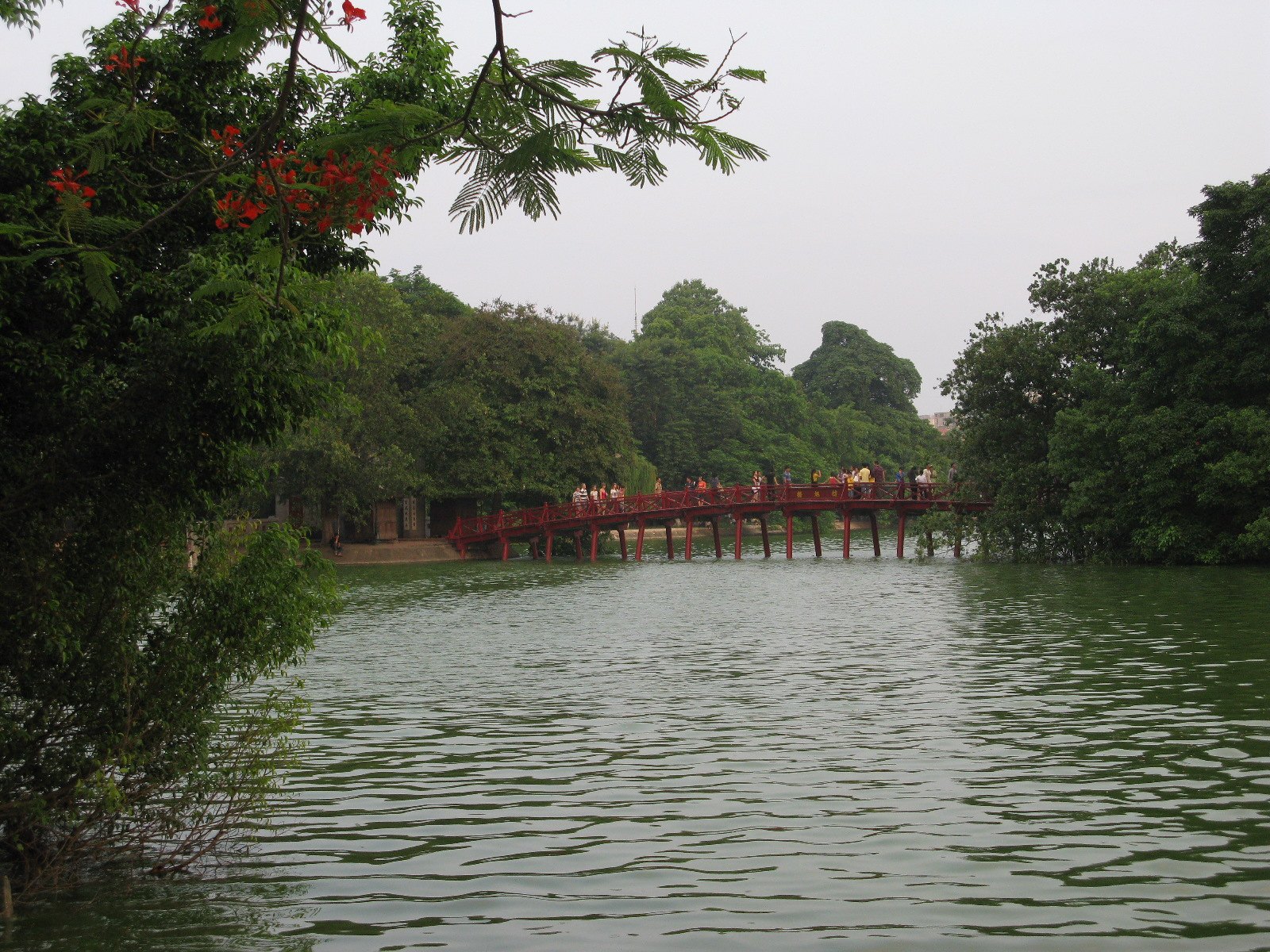
Featured image: Photo by Caitriana Nicholson from 北京 ~ Beijing, 中国 ~ China, source, CC BY-SA 2.0
