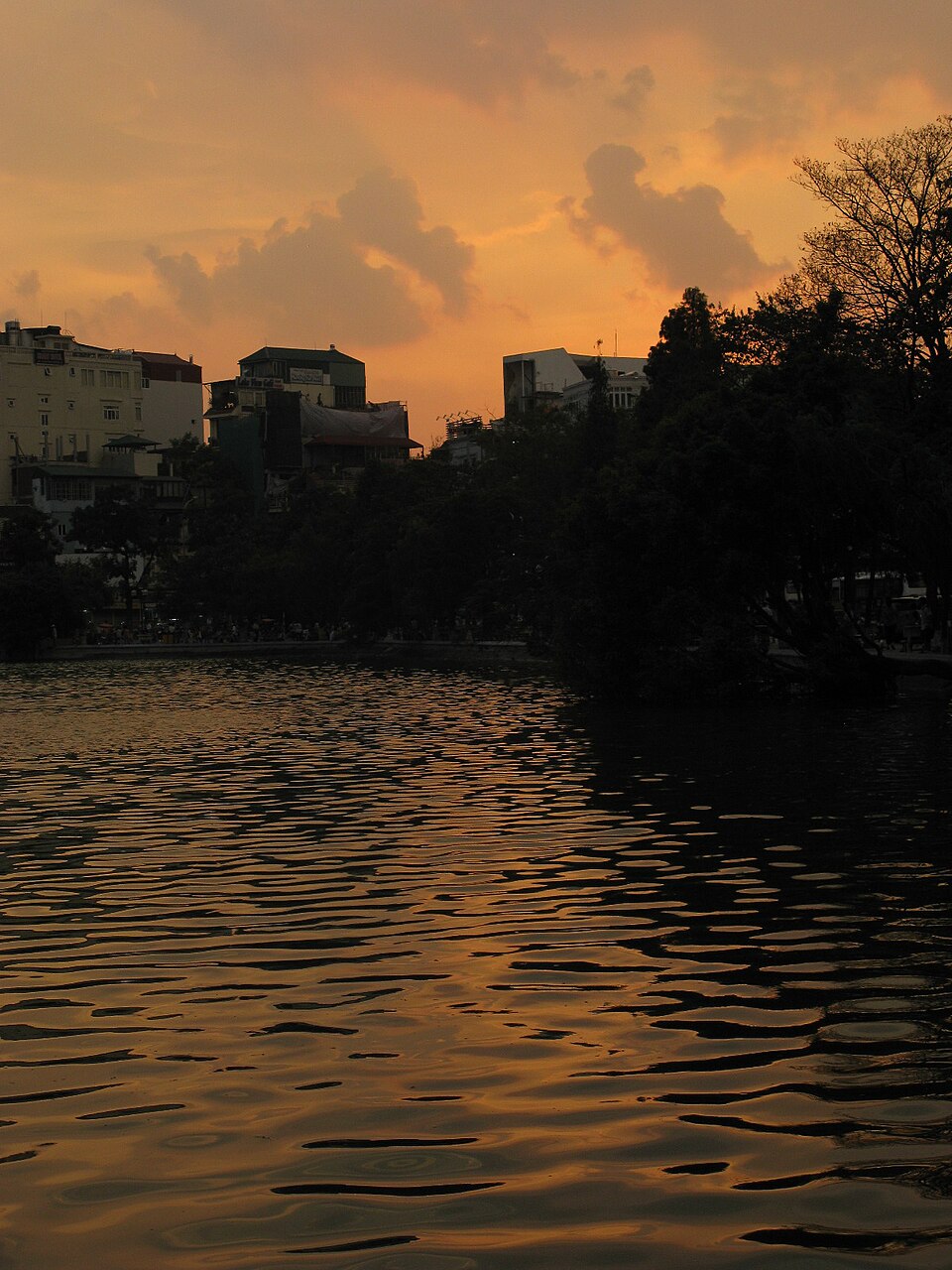
Chùa, đền and đình are three different kinds of building, not three ways of saying “temple”. A chùa is Buddhist. A đền honours a deified person — historical or legendary. A đình is a village’s communal house, built around a guardian spirit. The words name who or what a building was built to worship. They do not always describe what a visitor finds inside today.
What each word is built to do
A chùa (chùa) houses Buddhist worship: statues of the Buddha, bodhisattvas, monks or nuns in residence, and a main hall oriented around an altar of Buddhist images. Hanoi has hundreds of them, from single-room neighborhood shrines to large monastic complexes.
A đền (đền) is built for a specific deified figure — a general, an emperor, a scholar, a local hero who was formally recognized after death. Worship here is closer to ancestor veneration raised to a civic scale. The person is remembered as someone who protected or served the community.
A đình (đình) is older than either in function. It is the communal house of a village or a guild, built around that group’s tutelary spirit — its thành hoàng. Before it was anything else, a đình was where village business happened: meetings, festivals, disputes settled in front of the spirit’s altar. Many of Hanoi’s Old Quarter streets, each tied historically to one trade guild, kept their own đình.
That three-way split is clean on paper. On the ground, in Hanoi, it rarely holds.
Where the clean split breaks down
Vietnamese religious practice has never sorted neatly into separate lanes. Buddhist, Confucian, Taoist and folk elements sit on the same altar in many older buildings — a pattern sometimes called tam giáo, the “three teachings.” A sign naming a building đền, chùa or đình tells you its origin. It does not guarantee what you will see when you walk in.
A handful of well-known Hanoi sites make the point directly.
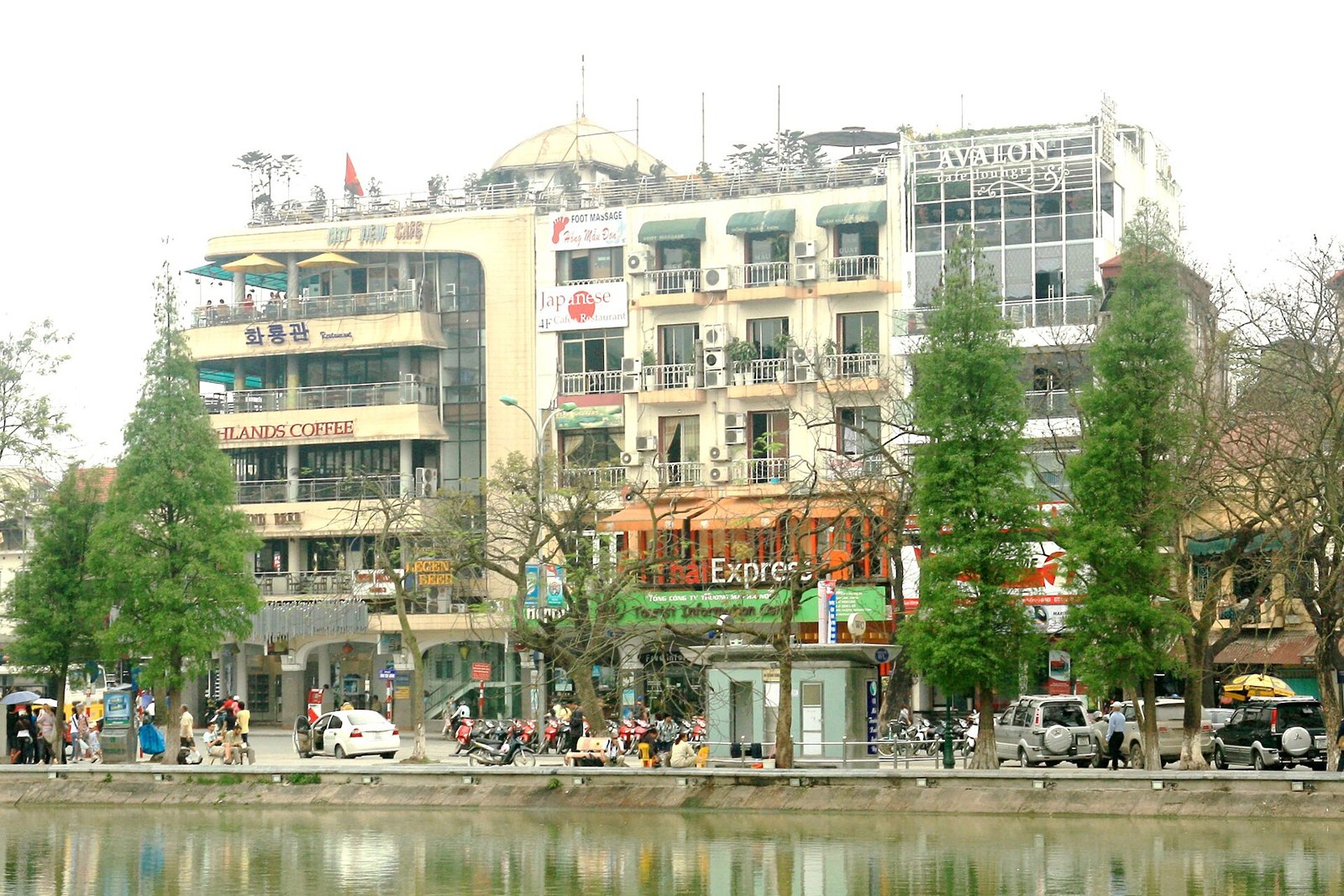

| Site | Word on the gate | What is actually there | Why it breaks the rule |
|---|---|---|---|
| Đền Ngọc Sơn, Hoan Kiem Lake | đền | Altars to a literature deity and a 13th-century general, alongside Buddhist and Taoist imagery | Guidebooks and locals alike sometimes call it “chùa Ngọc Sơn” by mistake — the mixing is real enough to confuse the label |
| Đình Kim Ngân, Hang Bac street | đình | A restored guild house for Hanoi’s gold and silversmiths, now run as a craft and heritage exhibition space | Built around a trade’s guardian spirit, but day-to-day worship is no longer the visible function |
| Chùa Hà, Cau Giay | chùa | A working Buddhist pagoda, widely reported in Vietnamese media as a destination for young people praying for romantic luck | The dominant visitor practice is folk divination about love, not core Buddhist doctrine |
| Phủ Tây Hồ, West Lake | phủ — a fourth word | A shrine to the Mother Goddess Liễu Hạnh, part of Đạo Mẫu practice | Not covered by the three-way split at all; UNESCO inscribed the wider Mother Goddess worship tradition in 2016 |
| Đền Bạch Mã, Hang Buom street | đền | One of the four sacred guardian temples of old Thang Long, honouring the city’s protective spirit | A control case — the label and the function actually match |
One more mismatch is worth flagging before you even reach the gate. Hanoi’s Temple of Literature is translated into English with the word “temple,” which primes a visitor to expect a đền. In Vietnamese it is Văn Miếu — a miếu, a fourth and separate term for a shrine to Confucius and the scholars who passed the imperial examinations. It was never a đền to begin with.
Reading a building when you’re standing in front of it
A few details hold up better than the name on the gate.
- Monks or nuns in robes, and rows of Buddhist statuary on a raised dais, mean a working chùa regardless of what else is mixed in.
- A single carved spirit tablet or a portrait of a named historical figure, with no Buddhist statuary nearby, points to a đền.
- Wooden beams carved with scenes of village life, communal meeting space, and a courtyard built for gathering rather than private prayer, point to a đình.
- A date in the founding inscription older than roughly the 10th or 11th century is usually a chùa — Buddhism reached northern Vietnam well before the deified-hero and village-spirit cults that produced most đền and đình.
None of this is a firm rule. It is a way to read a building that the sign alone won’t give you.

The practical bits
Dress rules are shared across all three: shoulders and knees covered, shoes off where floor mats or raised platforms require it. The site’s own guide to dress code for the mausoleum, the cathedral and the pagodas sets out what gets turned away at which kind of entrance.
Entry to most chùa, đền and đình in Hanoi is free or runs on a small voluntary donation box rather than a ticket. The guide to eleven free things in Hanoi lists several, with their actual opening hours rather than guessed ones. If you’re carrying cash for the donation box, remember that Vietnam’s 20,000 and 500,000 notes are both blue — worth checking before you drop a note in.
Several of the sites named above sit inside the same walking clusters covered in the site’s piece on how to walk Hanoi’s three sight clusters, which groups the Hoan Kiem Lake sites, the Old Quarter guild houses and the West Lake temples so you’re not crossing the city three times for three buildings. More landmarks, with the same attention to what a place actually is rather than what it’s sold as, sit in the Landmarks & Sights archive.
This article works from published descriptions of each site’s history and function, not from a visit. How the Access Hanoi Editorial Team checks and sources its claims is set out on the About page.
The Mother Goddess worship tradition connected to Phủ Tây Hồ was inscribed by UNESCO’s Intangible Cultural Heritage program in 2016, and the listing’s own page sets out what the inscription covers and does not cover.
Related reading
how this site is written, checked and paid for, what is collected when you read this site, Hanoi in the Rain: What Is Still Worth Doing, by Rain Type, What to Wear for the Mausoleum, the Cathedral and the Pagodas, The Three Sight Clusters of Hanoi, and How to Walk Each One.
Access Hanoi is an independent guide written from published, checkable sources. We have not visited the places described here and we do not publish personal recommendations or invented ‘local favorites’ — where something is singled out as notable, we say who says so. Opening times, fares, closures and prices change at short notice, so treat everything here as a starting point and confirm with the museum, operator or venue directly before building a day around it. We give no advice on visas, insurance, health or safety; use your own government’s official guidance for those.
Featured image: Photo by Caitriana Nicholson from 北京 ~ Beijing, 中国 ~ China, source, CC BY-SA 2.0
