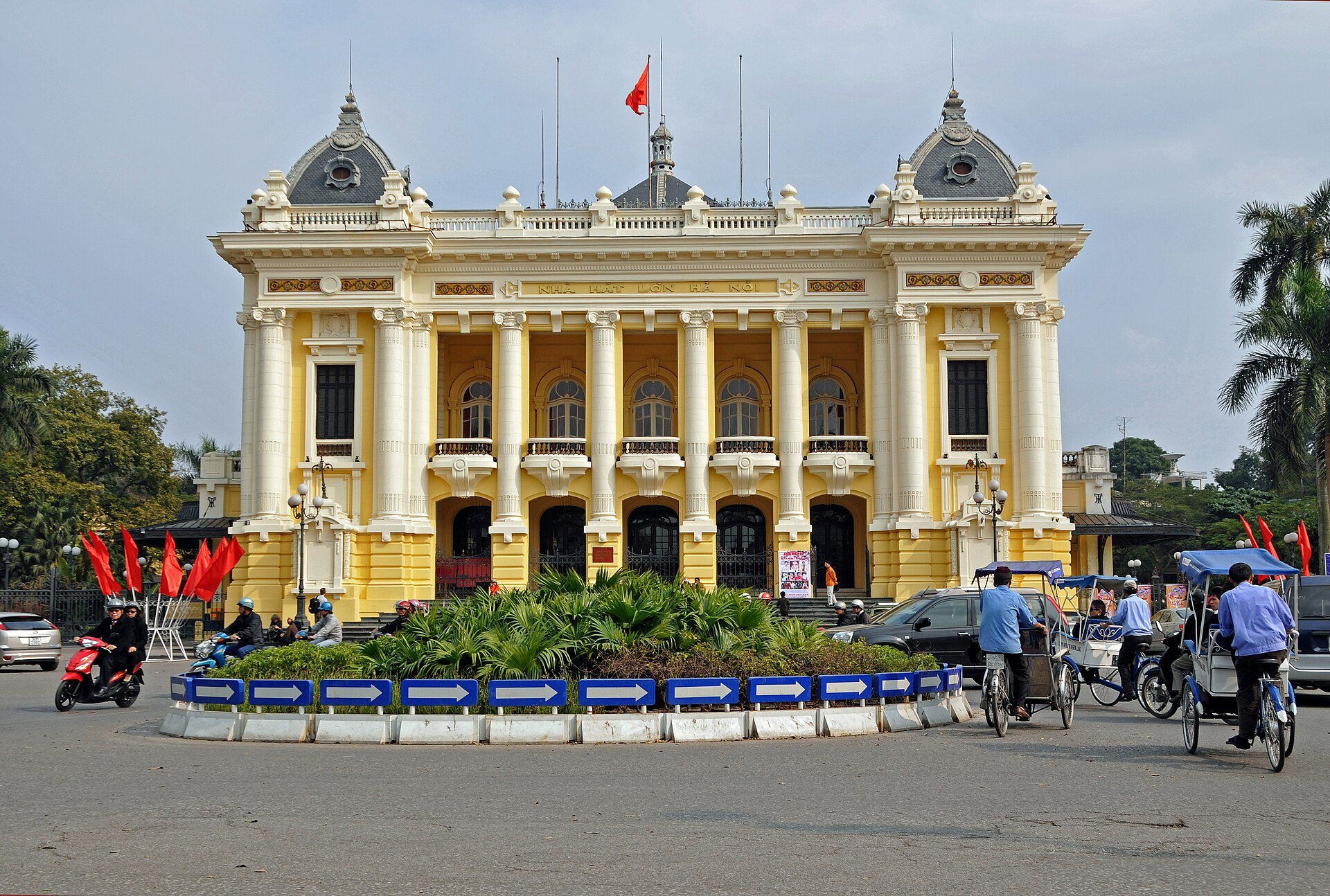

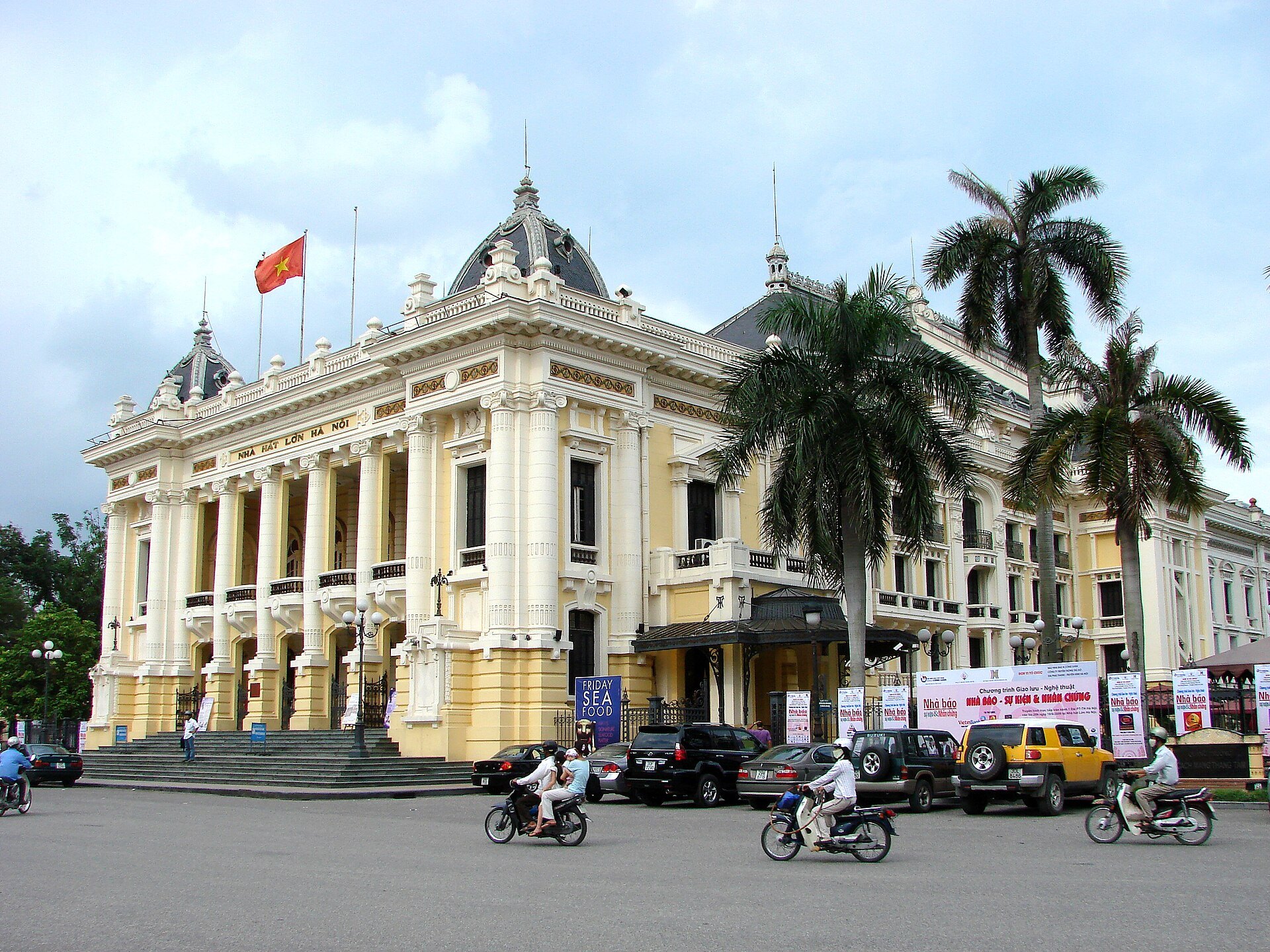
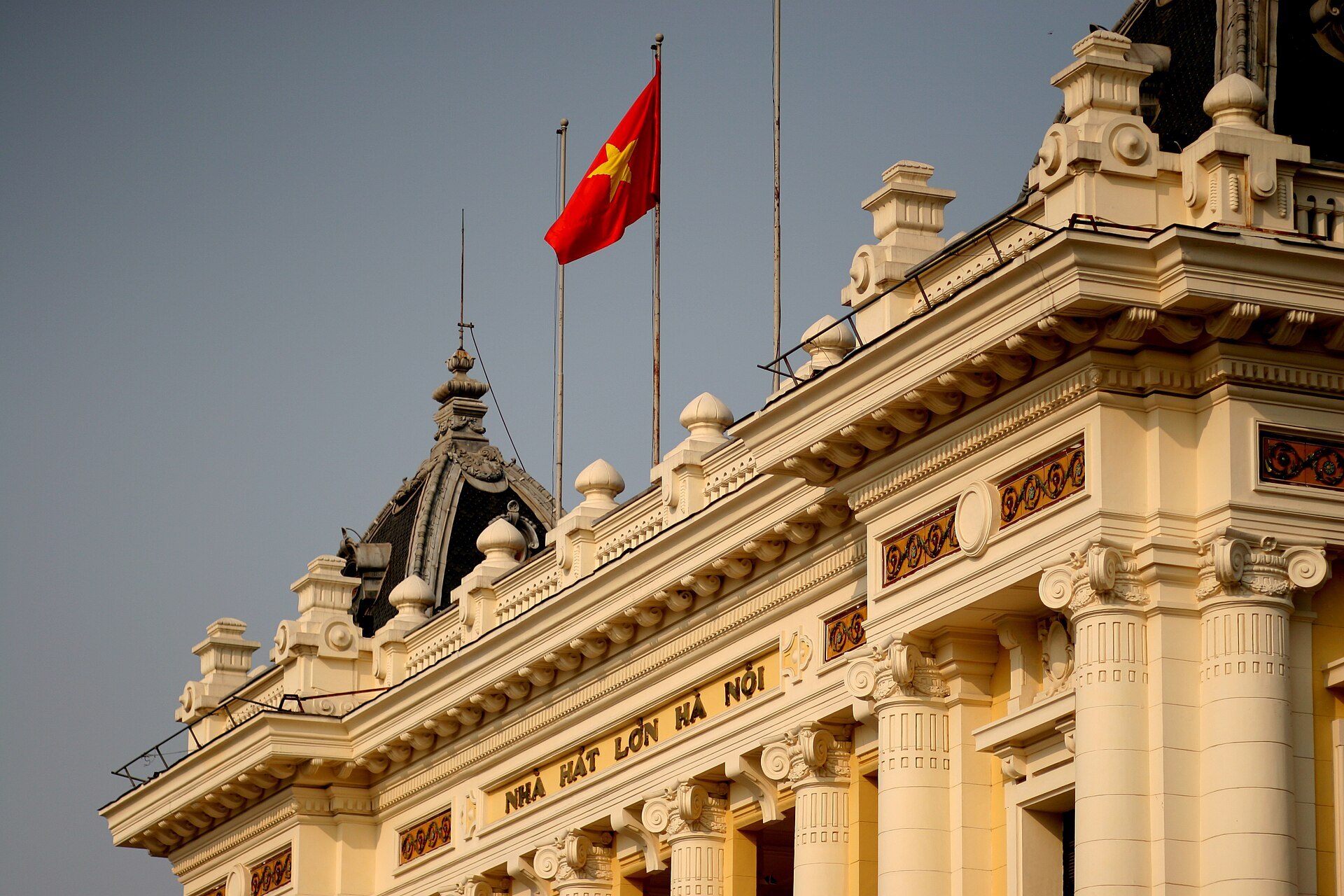
South and east of the lake the streets suddenly get wide, straight and lined with tamarind trees, and the buildings turn ochre with shutters. This is the colonial city, laid out from the 1880s, and its centrepiece is the Opera House of 1911 — a smaller copy of the Palais Garnier, put up at the far end of an avenue so that it would be seen from a distance.
It is the quietest walking in central Hanoi and the one part of the city where you get a pavement to yourself.
What it costs
⭐ Free to walk. The Opera House is a working theatre; the way to see the inside is to buy a ticket for whatever is on, and there are guided tours at some times of year — ask at the box office rather than trusting a listing.
When to go
Late afternoon, when the light comes down the avenue onto the front of the Opera House. This is also the only quarter that is pleasant in the middle of a hot day, because the tamarinds actually shade the pavement.

Getting there
Ten minutes’ walk from the south-east corner of Hoan Kiem Lake, along Trang Tien past the bookshops.

If you only have an hour
Trang Tien from the lake to the Opera House, round the front, then north up Ly Thai To past the government buildings and back to the water. Forty minutes, all of it shaded.
What people get wrong
⚠️ People come looking for a quarter and find a handful of streets. It is not a district you disappear into like the Old Quarter — it is an axis, and it is best treated as one long walk rather than a place to wander.

Nearby
Admissions, closing days and dress rules as published and checked on 7 September 2026. These change without much warning — confirm with the place itself before you travel. More sights, and how they fit together, in Landmarks & Sights.